OFO sharing bicycle
This blog will introduce a bike sharing company OFO sharing bicycle, which is China’s first pile-free bicycle sharing platform and created a “pile-free bicycle sharing” model dedicated to solving urban travel problems. OFO’s mission statement is “it can be easier when riding”. When people need to use a bicycle, they don’t have to worry about parking, don’t have to lock, and don’t have any worries. In the future, it hopes to connect bikes in every corner of the world, so that people can unlock the bikes through the app anywhere to meet the needs of short-distance mobility. Since its launch in June 2015, it has connected 10 million shared bicycles and provided more than 4 billion trips to 20 countries, more than 250 cities and more than 200 million users (Chinese News, 2017). Its success is due to the use of digital networks and the Internet innovation model of the sharing economy, linking people’s travel with cycling through social software. Including the choice of bicycle travel among people’s choices has eased the traffic pressure in the city, and at the same time saved more space for the city.
OFO’s digital business model has the following two types. First, the market model. Similar to Amazon, its digital platform acts as an intermediary market for products and services: combining supply and demand. The digital business model following this model is value-added due to the fact that a large number of independent participants are active in the market and conduct regular transactions (Innolytics, 2020a). Second, the ‘use rather than buy’ principle. This digital business model supports another use of assets. Monetization is no longer the possession of assets, but the use or use of assets. Digital technology makes it possible to measure consumption or use (Innolytics, 2020b). For example, in the field of bicycle sharing, rents and return trips as well as kilometers or miles travelled are billed. For machines, payments can be made based on runtime data. In addition, this principle can help companies reach new target groups. Those who are unwilling to spend some money on bicycles and worry about bicycle placement and maintenance. Therefore, these two digital business models have brought huge economic effects to OFO and achieved rapid profit growth.
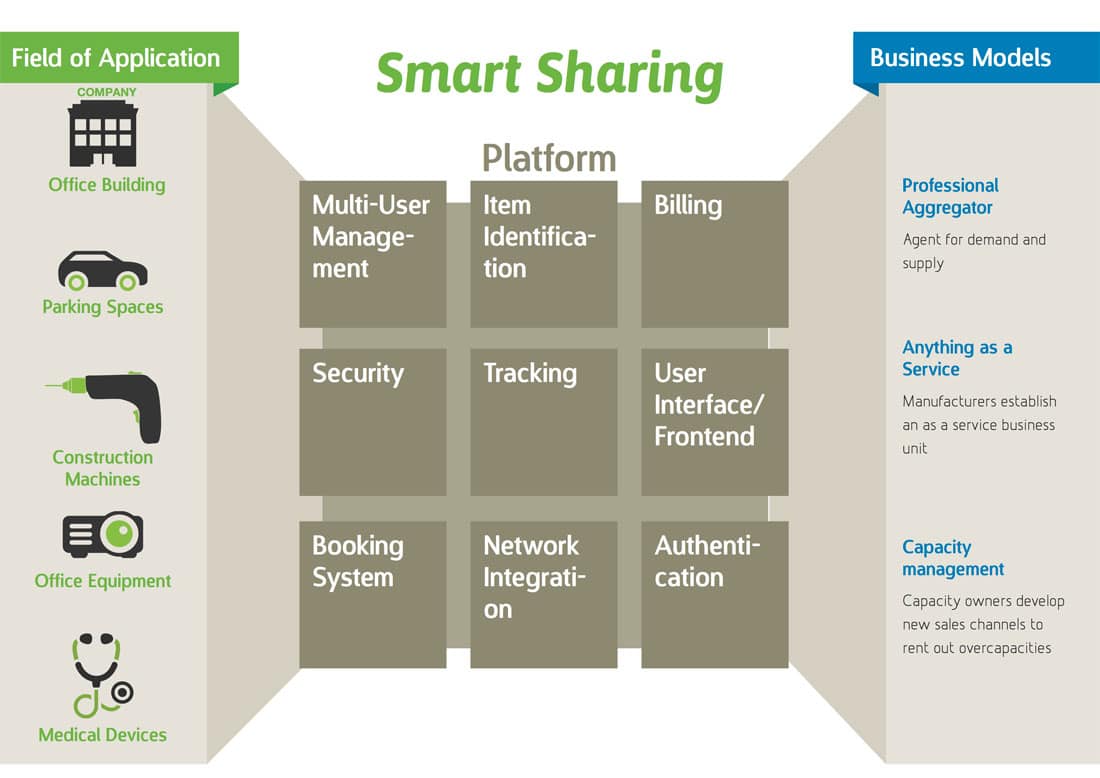
How does OFO’s digital platform connect products and services and generate profits? This problem will be described in detail by the following picture.
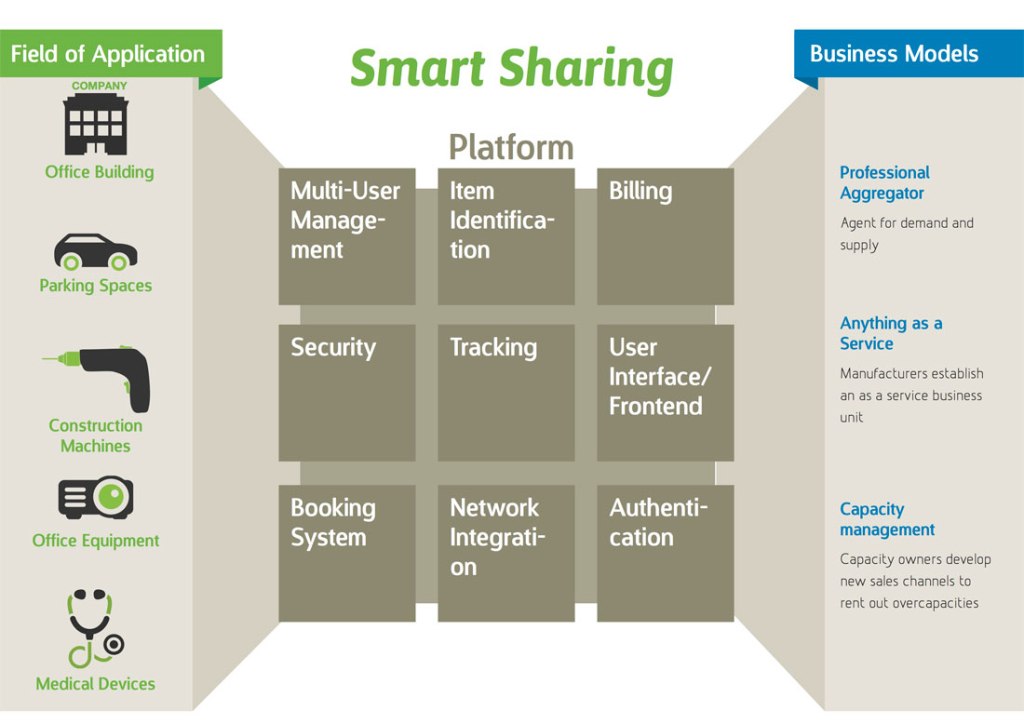
Field of Application. First, each of OFO will set up company branches to manage local business activities. Second, after cooperating and negotiating with the government, and because of the small footprint, most of the Parking spaces will be set up in schools, subways, bus stations, and crowded places. This is not only convenient for people to use, but also relieves the traffic pressure in the city. Third, the company will have specialized factories to assemble and repair bicycles. The service life of the bicycle is limited. Once people find that the bicycle is broken, they can notify OFO through the platform’s app. At this time, the status and positioning data of the bicycle will be uploaded to the platform, and the staff will collect these unserviceable services. bicycle.
The use of the network enriches the platform’s functions, including customer management, product identification, charging, security, and tracking. First, customer management. The usage times and locations of each bicycle will be recorded and uploaded, which will help analyze the market demand, know which locations are insufficient or the number of idle bicycles, and make corresponding market adjustments. Second, product identification. There will be a corresponding QR code on each bicycle. Users can scan through the app, and because of the Bluetooth function, finally, the bike will be automatically unlocked. Third, the fees. Users need to pay a deposit of 99RMB before they can use it, and charge in the form of 1RMB per hour. In addition, OFO launched Day Card, Monthly Card, and Annual Card to save money for users who often ride bicycles. Fourth, security. In order to protect the personal safety of users, it provides riding insurance for each user’s car. Fifth, tracking. For users, if you want to know where there are bicycles nearby, you can find them through the positioning guide on the app. For the staff, it is convenient for them to find the bicycles that have been placed and collect them and place them in a place with high user activity. Finally, Users can share their bikes so they can get free use of all OFO’s bikes (NetEase News, 2016). The above is the rise of OFO company, an innovative enterprise.
Reference
Chinese News. (2017, May 3). OFO enters the 100th city in the world. Retrieved from https://baike.baidu.com/reference/20808277/195aWTjquCCo_5yHr9mR6aDKhUpJ7kwejlD4UsLrlgheTT3J-7zjRqHxjD04p4gjx1Z3FbiN-DjS-kbhSXmc0DDNJeA2hJZvkUQbv8uTdNDfBBsZMAjQ-B-_pYo
Innolytics. (2020a, March 4). What is a digital business model? Retrieved from https://innolytics-innovation.com/digital-business-model/
Innolytics. (2020b, March 4). Example of a digital business model in the sharing economy. Retrieved fromhttps://innolytics-innovation.com/wp-content/uploads/2019/02/Digital-Business-Model-Sharing-Economy.jpg
NetEase News. (2016, November 11). OFO launches city sharing plan.Retrieved from https://baike.baidu.com/reference/20808277/b1daLnIJEIPyR16ggtmZN2LPbWGdCUoaEJwmFcR5Oox1siFDDGKJCMI477OS9eqygLZusAY_cE1y3EjoHLkWpAxFYmntqxAAhAKWLn6YM8EU
 Blog post 2